
Salmon DNA: What The Helk Is It And Why Do I See It Everywhere All Of A Sudden?
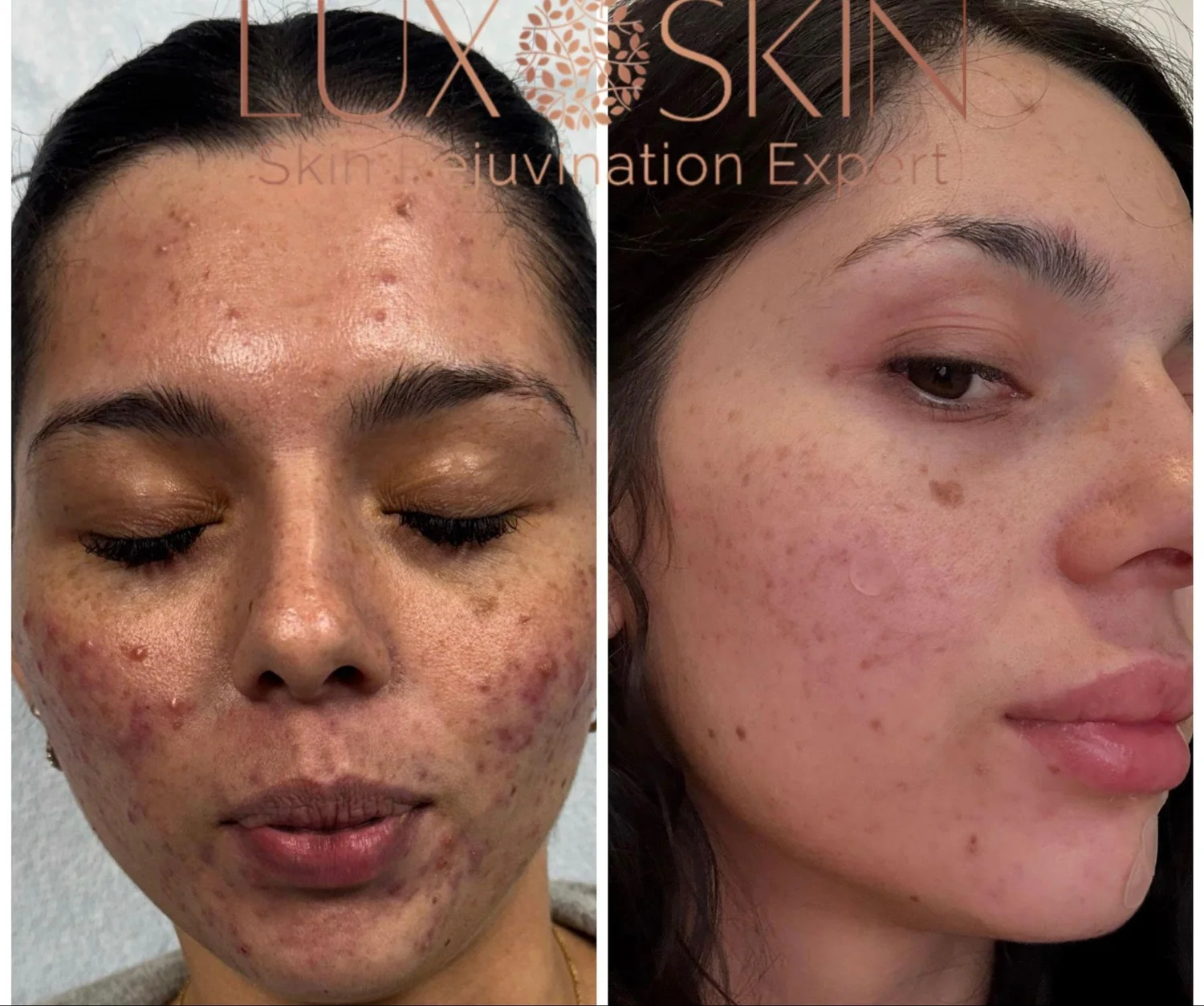
You’ve probably scrolled past the phrase “salmon sperm facial” or “Salmon DNA serum” at least once this month and wondered if the beauty world has officially lost it. The truth is, while we just discovered our new obsession, its old news to Korean Beauty. In true K-beauty fashion, one of skincare’s most unlikely ingredients has quietly evolved from clinical injectables into trending serums, masks, and ampoules. So what exactly is Salmon DNA, why has Korea been obsessed with using it for years, and how safe (or real) are these results? (Scroll below for a mind blowing Salmon DNA before/after from my beautiful patient who was suffering from severe acne)
What Is Salmon DNA, Really?
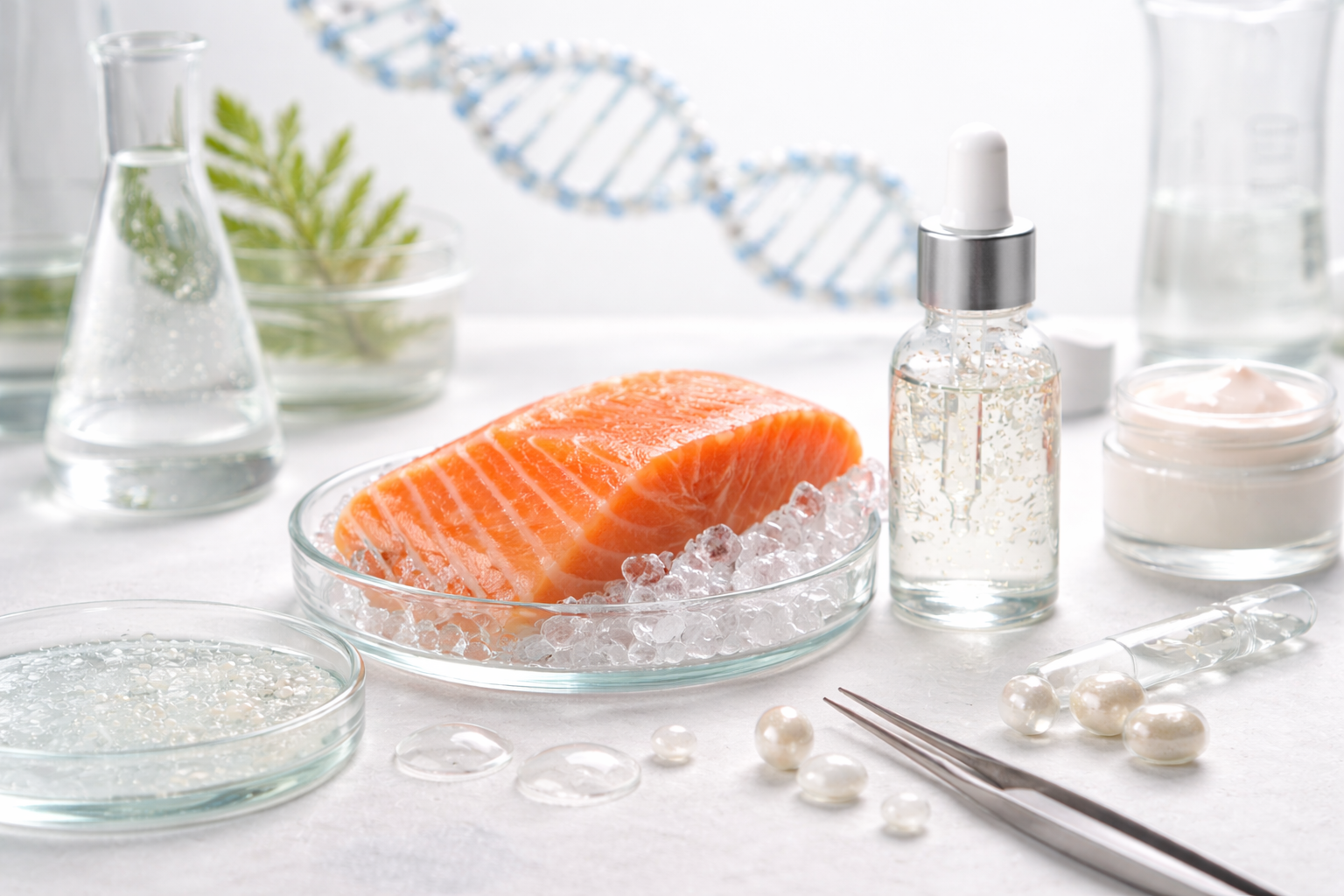
Salmon DNA also labeled PDRN (polydeoxyribonucleotide) on a lot of products is a regenerative compound extracted from salmon sperm or gonads. Quick pause to think about the last time you heard the word gonad being used. Moving along, Salmon DNA is composed of short DNA fragments that the skin can recognize and use to stimulate repair, improve texture, and boost hydration. Structurally Salmon DNA is about 97% compatible with human DNA, therefore our bodies respond to it as a natural healing signal. Salmon DNA helps trigger fibroblast activity, encouraging new collagen and elastin while also calming inflammation. What you are left with is a combination that makes skin look smoother, firmer, and more luminous over time. It is also one of the best products I have ever used on patients suffering from acne.
How Long Has Korea Been Using Salmon DNA And How?
While the West is just catching on, South Korea has actually used salmon DNA treatments since the early 2010s. In Korea Salmon DNA is actually considered part of regenerative medicine and is often used post laser or during microneedling to accelerate healing and bump up the end result. The most famous version of Salmon DNA is called Rejuran, often nicknamed “baby skin injection.” Dermatologists in Korea inject Rejuran directly into the dermis using micro needles (think Botox), allowing the PDRN to work at a cellular level. Patients describe incredible improved elasticity, tighter pores, and a skin that is more even in tone. Take it from a person who had it done to herself, this is all spot on! The sting is similar to the pinch you feel during Botox, the immediate after looks similar to a tb wheel test, shortly after when the bumps dissipate you are left with shiny glasslike skin. Its commonly paired with being injected into the neck as well. A bit pinchier but my goodness what a difference.
The Injectable Controversy: (Oh yah, it’s a huge controversy in the industry right now) And Why The FDA Hasn’t Approved It (Yet)
Here’s where things get complicated. In Korea, Rejuran and other salmon DNA injectables are government approved for aesthetic use. In the U.S., however, they are not FDA approved for injection. Meaning, medical providers technically can’t market or administer them as cosmetic fillers or skin injection boosters.
Despite that, some medspas (many) and aesthetic nurses in the States have begun offering “off-label” or “under the radar” versions using imported product such as Rejuran. The results can be beautiful if done correctly and by the right practitioner, but it’s a very gray area. Without FDA clearance, quality control, sterility, and formulation not only can consistency vary but if something goes wrong will insurance cover your practitioner for malpractice in the US?
For consumers, this means two things:
Be cautious about who’s performing the procedure on you if you decide to receive an off label treatment in the US.
If you purchase topical Salmon DNA, opt for PDRN serums and 1 time use ampoules instead. They’re safe, accessible, and deliver visible benefits without the risk.
How Professionals Are Supposed To Be Using Salmon DNA (In the states)
I have personally used the Rejuran healing essence on my patients many times. Will you the consumer have access to it? Unfortunately, you won’t. As a state licensed skin rejuvenation practitioner, I have access to this incredible product and I can tell you that although we can’t inject it, I have seen it do wonders when microneedling with it. Up until now I only screamed Exosomes from the rooftop. Not anymore! The Rejuran healing essence is a 2ml one time use syringe that holds ultra pure Salmon DNA. Their solution is non-immunogenic, non-cytotoxic, and biocompatible, meaning it shouldn’t trigger immune rejection or inflammation. Its endotoxin levels are tested to meet European Pharmacopoeia standards. And there are no crosslinking agents, anesthetics, or fillers present, which may seem like a given but in the beauty industry it is absolutely not. I have used it to microneedle patients battling acne, wrinkles, hyperpigmentation, and skin laxity. I have also used it on patients after an invasive laser treatment to help accelerate healing.
To date every patient has showed significant improvement within 24 hours of using the product. There was even one day that I microneedled the office manager with it, and about 4 hours later someone questioned why she hadn’t had her procedure done by me, and what moisturizer she used on her skin that day because it was glowing. It turns out she skipped the 24-48 hours of redness you typically see with microneedling procedures and jumped straight to glowing skin. Of course, were not all going to react this way, but I will say it seems to be the general consensus of my patients these days.
This is a picture of my beautiful patient Stephanie who went somewhere to get microneedling and ended up with a skin infection.
This is post 3 Rejuran SALMON DNA essence microneedling sessions with me:
Salmon DNA And Acne A Deeper Dive
Here’s the part most people miss when they think Salmon DNA, it’s not just about glow, it’s actually about healing.
Acne isn’t only a pore issue; it’s an inflammatory cascade that damages the skin barrier and triggers lingering redness, scarring, and rough texture. This is what Salmon DNA does for acne:
Calms inflammation: PDRN downregulates inflammatory cytokines. In other words, it tells irritated overactive skin cells to chill out. This helps reduce the redness and swelling that accompany breakouts.
Accelerates repair: By stimulating fibroblast growth and microcirculation, it helps heal post acne lesions faster, minimizing the risk of dark spots or lingering marks.
Rebuilds barrier strength: Regular use improves the skin’s ability to retain moisture and resist irritation; crucial for acneic skin that’s been over stripped by actives like benzoyl peroxide or retinoids. (You know I live and breathe benzoyl and retinoids)
Improves texture and scars: In clinical settings (such as Rejuran Healer treatments in Korea), dermatologists use Salmon DNA injections specifically for acne scarring and post inflammatory redness, with visible improvement in smoothness and tone almost instantly.
From Needle to Serum: DNA Products You Can Get Your Hands On
Once Korean labs realized how powerful PDRN was, they began formulating non injectable at home versions for themselves. However, once Salmon DNA went viral in the States (thanks TikTok) serums, creams, masks, overnight masks, nano encapsulation/microneedling penetration patches, all seemed to appear overnight.
No seriously, in 2025 an estimated 400 products featuring Salmon DNA or PDRN were listed on Amazon. Here’s what you should actually look for.
Injectables: Only trained medical professionals abroad (allegedly) should administer them. MD, or NP never an esthetician, or aesthetician not even myself; a skin rejuvenation specialist and instructor.
Topicals: Perfectly safe for at home use when purchased from verified retailers. Look for “PDRN” or “Polynucleotide” on the ingredient list. Do not fall for “salmon extract or serum.” It’s a gimic.
Not for vegans: The DNA is derived from salmon, though purified and sterilized.
Final Takeaway
Salmon DNA is one of those rare ingredients that bridges biotechnology and nature. In clinic form, it’s a regenerative injectable. In skincare form, it’s a gentle, glow enhancing serum that restores and heals the skin.
As always, innovation outpaces regulation so it’s smart to enjoy the topical benefits and leave the injections to trained professionals overseas (for now).
What I Look For In Brands
Clinical Credibility: I want to stick with brands that have dermatologist backed science. Meaning, those brands that have clinical studies and proven outcomes.
Ingredient Integrity: The formulation should be the latest in technologies, peptides, barrier support actives, without unnecessary fillers or hype. Transparency in ingredient lists matter.
Skin Type Inclusivity: A good brand gives options for various skin types; sensitive, normal, oily, thin, thick, younger, older as well as strengths; starter, intermediate, advanced. This allows you to grow into a routine within a brand rather than feeling boxed out. And a brand that is aware of all Fitzpatrick skin tones is a winner! It is extremely important to remember that everyone can’t fit into the same “box”, I love a brand with a variety of formulations that cover everyone from the pastiest to the darkest princess or prince of the land!
| Product | Key Highlights | Ideal For | Price |
|---|---|---|---|
| Medicube Salmon DNA PDRN Pink Peptide Serum | 10,000 ppm PDRN + peptides + niacinamide; strong repair + glow; great entry point, viral 4,000 reviews. | Beginners, post acne calming, daily glow seekers. | $22 |
| Rejuran Turnover Ampoule c-PDRN | Clinical brand, cited as “Best Overall” PDRN serum available on market; refined texture/elasticity focus. | Fans of clinical grade actives without injections. | $69 |
| Medicube Salmon DNA PDRN Pink One Day Serum | Value ampoule program; lightweight, non-sticky; easy 7–10 day rejuvenation cycle. | Great for travel, one time use vials. | $19 |
| Dr. Drawing Salmon DNA Rejuvenation Ampoule | Medi-spa favorite; targets fine lines, dehydration, uneven texture. | Mid-luxury routines; mature or dull skin. | $80 |
| Anua PDRN Hyaluronic Acid Capsule 100 Serum | Hyaluronic acid complex, PDRN, hydrolyzed collagen, concentration of PDRN: 100 ppm. | Those struggling with dry skin; wanting instant plumpness. | $27 |
| Rejuran Intensive Eye Cream c-PDRN | Patented technology, PDRN + hyaluronic acid + peptides + adenosine. | Eye treatment for wrinkles, lifting, dark circles, and hydration. | $64.99 |
| Medicube Salmon DNA PDRN Pink Hyaluronic Moisturizing Cream | PDRN, niacinamide, and hyaluronic acid. Treats active and prevents new acne from occurring. | Blemish relief and hydration, restores skin barrier and evens skin tone over time. | $22.90 |
Disclaimer The information provided on this blog is for educational and informational purposes only and is not intended as medical advice. Individual results may vary. Always consult a qualified healthcare professional before starting any new skincare treatment or regimen.