
Aloe Vera: Nature’s Multi Vitamin Healer For Your Body and Hair
Few ingredients bridge the gap between haircare, body care, and skincare as effortlessly as Aloe Vera. Aloe Vera isn’t just soothing it’s biologically rich. Within its clear gel lies a micro dose of powerhouse vitamins that nourish your skin barrier, scalp, and body at a cellular level.
Once used in ancient Egypt as the “plant of immortality,” this succulent’s gel is packed with enzymes, amino acids, vitamins A, C, E and B12, making it one of nature’s most versatile actives. I know you’re probably thinking a bunch of vitamins great, but what exactly will it do for me and how? (Scroll below for recipes) Let’s break it down and make this super simple to understand…
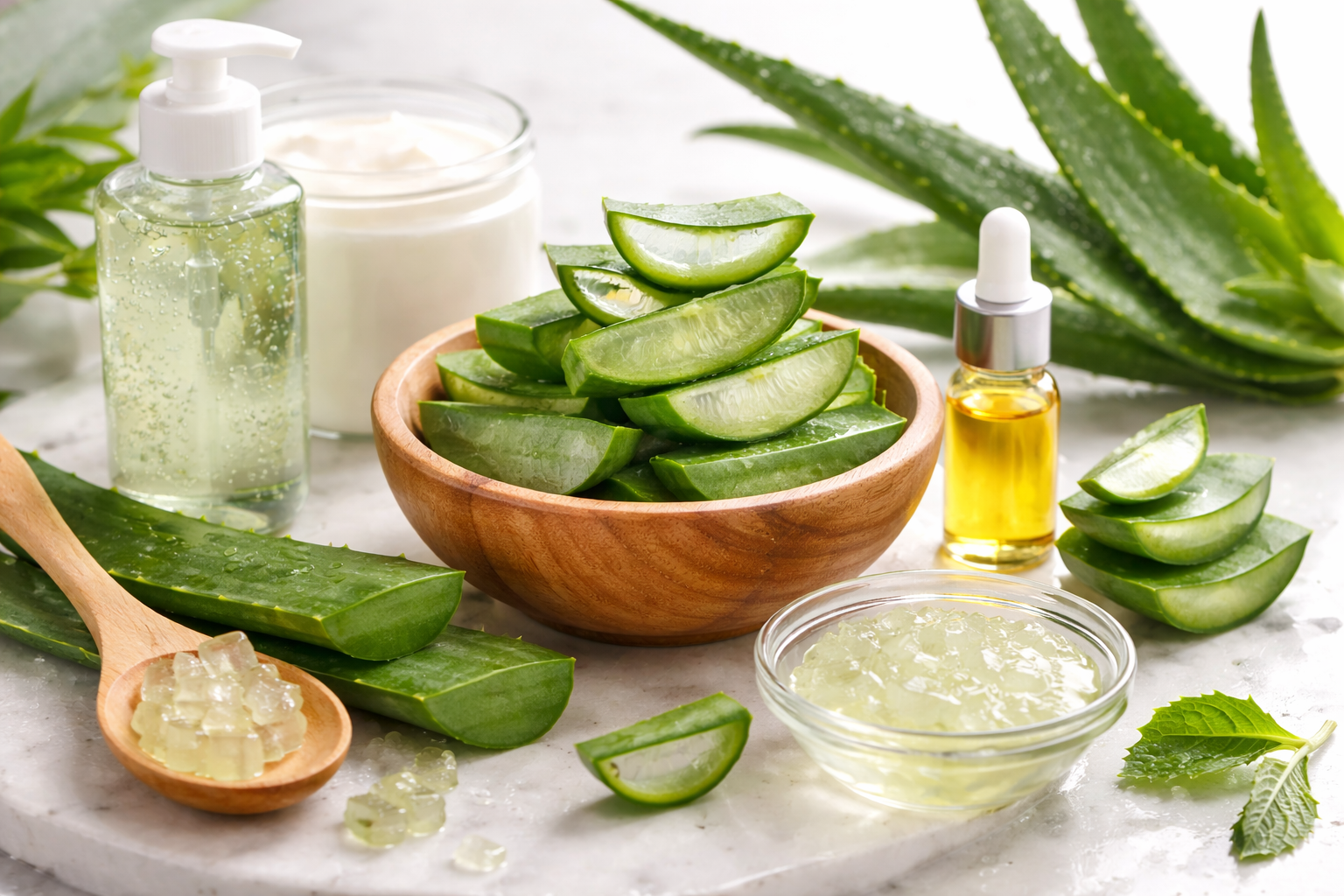
The Vitamin Power in Aloe Vera; What Does Each One Do
Vitamin A (Retinoids & Carotenoids)
Face: Encourages skin cell turnover, helping fade dark spots and smooth fine lines. Vitamin A regulates oil production making it ideal for those prone to breakouts or dull texture. Think of it this way, every time you put aloe on your face it’s like putting a retinol or retinal on your face. That’s kind of crazy considering Aloe Vera is $3 and most Vitamin A costs $50-100 for 30ml!
Body: Strengthens epidermal tissue, supporting faster healing after sun exposure or shaving. Pure aloe is not the same as the bottled stuff so please don’t be fooled into spending $50 on vacation at the local gift shop after getting sun burn, it’s a scam.
Hair & Scalp: Vitamin A fuels sebum production, keeping the scalp hydrated and preventing brittle strands. Think shine but without the grease that many hair oils are associated with.
Vitamin C (Ascorbic Acid)
Face: A natural brightener that fades pigmentation and supports collagen synthesis. Combined with Aloe’s hydration, it leaves the complexion seriously firm and luminous.
Body: Boosts circulation and its antioxidant defense, improving overall tone and radiance. It also helps to protect against environmental stressors like UV and pollution. I love to put this on my arms, hands, and chest when I’m on vacation to minimize any future sun damage.
Hair: Stimulates collagen around your hair follicles for stronger roots and it reduces oxidative stress that can slow growth or cause thinning. I love the way the scalp feels after using aloe, I associate it with that feeling you get when your teeth are freshly and perfectly cleaned at the dentist.
Vitamin E (Tocopherol)
Face: An antioxidant that locks in moisture and softens fine lines. When paired with Aloe’s polysaccharides (natural sugars that help retain moisture, boost healing and strengthen barrier), it enhances barrier repair and calms skins inflammation.
Body: Supports elasticity and prevents transepidermal water loss (this occurs when moisture naturally evaporates from your skin in a manner that weakens and dehydrates your skin barrier). Vitamin E in Aloe is essential for supple, hydrated skin, and is especially beneficial for dry patches or scarring.
Hair: Improves scalp circulation and minimizes oxidative damage from styling or sun exposure, leading to smoother, more resilient hair. I love spraying it on the hair before getting into the ocean! It really helps my blonde strands fry less in the sun.
Vitamin B12 (Cobalamin)
Face: Assists in cell regeneration and reduces hyperpigmentation caused by uneven melanin activity. This is great for anyone struggling with hormonal imbalances or thyroid issues.
Body: Encourages healthy blood flow and tissue renewal, aiding the body’s natural healing response when paired with Aloe’s soothing enzymes.
Hair: Vital for hair follicle cell production. Deficiency is often linked to shedding or thinning, so topical aloe rich in B12 can support growth alongside proper nutrition.
How It Works
Together, all of these vitamins turn Aloe Vera from a simple gel into a nutrient dense treatment that hydrates, heals, and protects; a trifecta for balanced skin, restored barrier, and glossy hair.
Aloe Veras polysaccharides draw up and hold water in the skin, the enzymes gently exfoliate, and the anti-inflammatory compounds calm irritation, all while the Aloe supports collagen formation, speeds wound repair, and provides natural cooling. Name one other natural or chemical product that can do all of these things.
Cutting & Draining
When you harvest fresh Aloe directly from the leaf:
If you have a plant cut a mature outer leaf near the base of the plant, these contain the most gel.
If you don’t have a plant, Whole Foods, Trader Joes, and ShopRite have all seen my face hoarding these bad boys for about $2.99 each.
Stand it upright and cut the bottom side open with a sharp knife. You don’t need to cut off and inch just enough that the gel is exposed. Place it standing with the open side down in a small glass or bowl for 30–60 minutes. Personally I do the 30 minutes and if I have a big Aloe I cut it in half and drain both halves.
DO NOT SKIP THIS STEP. Doing this allows the yellow sap (aloin) to drain out. Aloin is the plant’s natural latex and can cause irritation or mild stomach upset if left in. For years I skipped this step until one day I was in a rush and my face and scalp felt like they were on fire. Some Aloe has a lot and some has very little, don’t risk it trust me she was a spicy little mfr. Pardon my French.
Once drained, pat the leaf thoroughly to remove any remaining yellow residue. Some people rinse it but our tap water is full of stuff so I just pat it out gently with a hand towel.
I like to filet the pieces in half and leave them connected and drag them down my hair like a hair straightener. You can really do this any way you would like. I will say though, if your Aloe has sharp edges feel free to lob them off. Once I’ve used a leaf for my hair, I will not use it for my face. So keep one separate if you plan to do both at once.
PRO TIPS
Always use clean utensils when scooping gel to avoid contamination.
If blending gel for masks, avoid metal blades when possible. I use a BPA free plastic spatula/knife but you can also use any glass tools as well. Metal can slightly oxidize the gel faster and if you like to keep it in the fridge for a few days to use on your face you’ll want it to preserve. I plop mine in a mason jar and slather it on my face while its nice and cold.
To extend freshness you can even add a drop of vitamin E oil or a bit of cold pressed coconut oil before refrigeration. I do this for body aloe not for face as I am acne prone.
Never leave Aloe at room temperature for long; it spoils quickly because it’s 98% water and has no preservatives.
Touching base on no preservatives for a second; make sure your hands are clean when you are handling Aloe. Even a swipe on your phone can mean spreading bacteria to your Aloe and then all over your face for a week. Not what we wanted to do here folks.
Always use clean utensils when scooping gel to avoid contamination.
If blending gel for masks, avoid metal blades when possible. I use a BPA free plastic spatula/knife but you can also use any glass tools as well. Metal can slightly oxidize the gel faster and if you like to keep it in the fridge for a few days to use on your face you’ll want it to preserve. I plop mine in a mason jar and slather it on my face while its nice and cold.
To extend freshness you can even add a drop of vitamin E oil or a bit of cold pressed coconut oil before refrigeration. I do this for body aloe not for face as I am acne prone.
Never leave Aloe at room temperature for long; it spoils quickly because it’s 98% water and has no preservatives.
Touching base on no preservatives for a second; make sure your hands are clean when you are handling Aloe. Even a swipe on your phone can mean spreading bacteria to your Aloe and then all over your face for a week. Not what we wanted to do here folks.
| Form | How to Store | Shelf Life | Notes |
|---|---|---|---|
| Fresh Gel | Store in an airtight glass container | 5-7 days in fridge | Keep it at the back of the fridge (coolest area). If it turns watery or smells sour, throw it out. |
| Blended Aloe Mask | Store in an airtight glass container | 3-4 days in fridge | Stir before each use, apply chilled for extra soothing effect. |
| Frozen Cubes | Pour gel into ice cube tray, cover, freeze | Up to 6 months | Perfect for spot treatments, after sun burns, or for easy scalp use. Don't defrost and re-freeze |
| Oil Infused Aloe Mix | Store in dark glass dropper bottle | 2-3 weeks (fridge) | Shake before use, keep away from sunlight. |
Lets Start Using Our Aloe
How to Use
Apply a thin layer of pure Aloe Vera gel or a blend to clean skin (face, body, or scalp). Leave on for a set time (listed below), rinse or layer (also listed below).
For the Face
Benefits
Soothes redness, irritation, or post treatment sensitivity
Hydrates deeply without clogging pores
Gently exfoliates dull surface cells for glow
Speeds healing of blemishes, minor burns, or micro injuries
Balances oil production for combination skin
For the Body
Excellent post sun or post wax relief
Smooths rough elbows, knees, and heels
Provides a cooling, anti-inflammatory effect
Helps soothe eczema prone or reactive skin when combined with ceramide lotions
For the Hair & Scalp
Calms itchiness and flakiness
Strengthens strands and seals moisture into the cuticle
Promotes a cleaner scalp environment
Supports healthy growth
Adds slip and shine without heaviness
| Treatment Type / Use Area | Ingredients / Mix | Recommended Duration | Best For | Result / Benefit | How to Use |
|---|---|---|---|---|---|
| Soothing Face Mask | Pure Aloe Vera Gel (or Aloe + Honey for dry skin) | 15-20 minutes | All skin types | Soothes, hydrates, calms redness | Apply a thin layer on cleansed skin, leave until tacky, rinse with cool water, follow with moisturizer |
| Soothing Face Mask Dry / Sensitive | 2:1 Ratio of Aloe Vera to Honey | 15-20 minutes | Sensitive / Dry | More aloe keeps it lightweight and cooling while honey deeply hydrates and soothes | Apply a thin layer on cleansed skin, leave until tacky, rinse with cool water, follow with moisturizer |
| Soothing Face Mask / Very Dry or Post Sun | 1:1 Ratio of Equal parts Aloe to Honey | 15-20 minutes | Very Dry / Post Sun | Balanced mix gives maximum moisture and healing. Slightly thicker texture retains moisture | Apply a thin layer on cleansed skin, leave until tacky, rinse with cool water, follow with moisturizer |
| Soothing Face Mask / Oily / Combo Skin | 3:1 Ratio of Aloe Vera to Honey (Manuka see below*) | 15-20 minutes | Oily / Combo Skin / Acne Prone | Keeps the mask light and non sticky while still retaining honey's antibacterial benefits | Apply a thin layer on cleansed skin, leave until tacky, rinse with cool water, follow with moisturizer |
| Oil Control or Acne Face Mask | Aloe + 1 tsp Green Tea or a few drops Tea Tree Oil | 10-15 minutes | Oily / Acne Prone | Balances oil, reduces breakouts | Apply evenly to face, avoid eye area, rinse and pat dry |
| Face Barrier-Repair Overnight Mask | Aloe + Ceramide Serum or Niacinamide | Leave on overnight | Dehydrated / Damaged Barriers | Repairs skin barrier, replenishes moisture | Layer a light coat before moisturizer or oil; sleep in it |
| Scalp Treatment Mask / Dry Damaged Hair | 2:1 Ratio of Aloe Vera to Coconut Oil | 30 minutes | Dry / Damaged Hair | More aloe hydrates the hair shaft and scalp while coconut oil seals in moisture | Massage into scalp and through ends; cover with shower cap; rinse, then shampoo + condition |
| Scalp Treatment Mask / Normal Weekly Maintenance Hair | 3:1 Ratio of Aloe Vera to Coconut Oil | 30 minutes | All Hair Types | Balanced moisture without heaviness, adds softness and shine | Massage into scalp and through ends; cover with shower cap; rinse, then shampoo + condition |
| Scalp Treatment Mask / Thick / Course / Curly Hair | 1:1 Ratio of Aloe Vera to Coconut Oil | 30 minutes | Coily / Tight Textured / Curly Hair | Heavier, creamier texture coats and softens dense or coily strands | Massage into scalp and through ends; cover with shower cap; rinse, then shampoo + condition |
| Scalp Treatment Mask / Fine / Oily Hair | 4:1 Ratio of Aloe Vera to Coconut Oil | 30 minutes | Fine / Oily Hair | Keeps hydration light and non-greasy while still preventing dryness | Massage into scalp and through ends; cover with shower cap; rinse, then shampoo + condition |
| Hair Growth Booster Mix | 2 tbsp Aloe + 1 tbsp Castor Oil + 3-4 drops Rosemary Oil | 20-30 minutes | Weak / Shedding / Thinning Hair | Stimulates roots, improves thickness | Focus on scalp, wrap hair in warm towel, cover with shower cap, rinse, then shampoo + condition |
| Leave-In Hydration Spray (Daily Use) | 2 tbsp Aloe + 1/2 cup Rose Water + 1 tsp Argan Oil | Leave-in | Coily & Tight textured / Curly / Frizzy Hair | Boosts shine, defines texture, refreshes ends | Shake well, spritz through mid lengths to ends daily. Lasts 7 days in the refrigerator |
| Body Soother | 3 tbsp Aloe + 1 tsp Vitamin E Oil | 10-15 minutes or leave-on | Dry / Sun Exposed Skin / Razor Burn (yes even down there) | Calms, rehydrates, and smooths skin | Apply to clean skin after shower or sun exposure, let absorb naturally |
Manuka honey* Manuka honey isn’t your average pantry honey. It is a medicinal-grade skin healer so potent we use it in hospitals to treat MRSA and wound infections in patients. Its rare antibacterial compound, methylglyoxal, destroys acne causing bacteria while accelerating skin repair and fading inflammation. For acne prone skin, it’s like nature’s antibiotic. Consider Manuka honey the holy grail to clinically healing acne and wounds. She pricey but she is mighty, and my go to for my acne patients especially those in their teens.
How to Layer for Maximum Effect
Always cleanse first → remove any film or oil before applying Aloe or Aloe blends
Keep it moist → Aloe works best on damp skin or scalp. Take your nice hot shower and afterwards apply to your body, face, and hair.
Seal with oil or moisturizer → this is completely option but it prevents quick evaporation especially for dry skin types. I prefer jojoba or grapeseed as they are non comedogenic.
Frequency: 2–3 times a week for hair masks, and daily for light face or body use.
Final Takeaway
I hope I’ve shown you that Aloe Vera isn’t a “trend”. It’s an incredible natural gift from mother nature that belongs in everyone’s routines. Whether you use it in its pure form, or blend it into one of the 200 concoctions I’ve listed in the above chart for you, its versatility makes it one of nature’s most incredible magical beauty staples of all time.