
Retinol vs. Retinal: The Only Breakdown You’ll Ever Need to Clearly Understand
If you’ve ever stared at a skincare label and wondered, “Wait, what’s the difference between retinol and retinal?”… you’re not alone. These two powerhouse ingredients are currently the most popular forms of Vitamin A on the market. The difference is found in how they behave on your skin, how quickly they deliver results, and which one you should actually use that can make all the difference in your long term glow. Lets break it down in the simplest, most factual way possible. I’ll throw in a bit about Tretinoin as well because shes kind of the bigger, stronger, sister in this bunch, even though she’s currently receiving less attention.
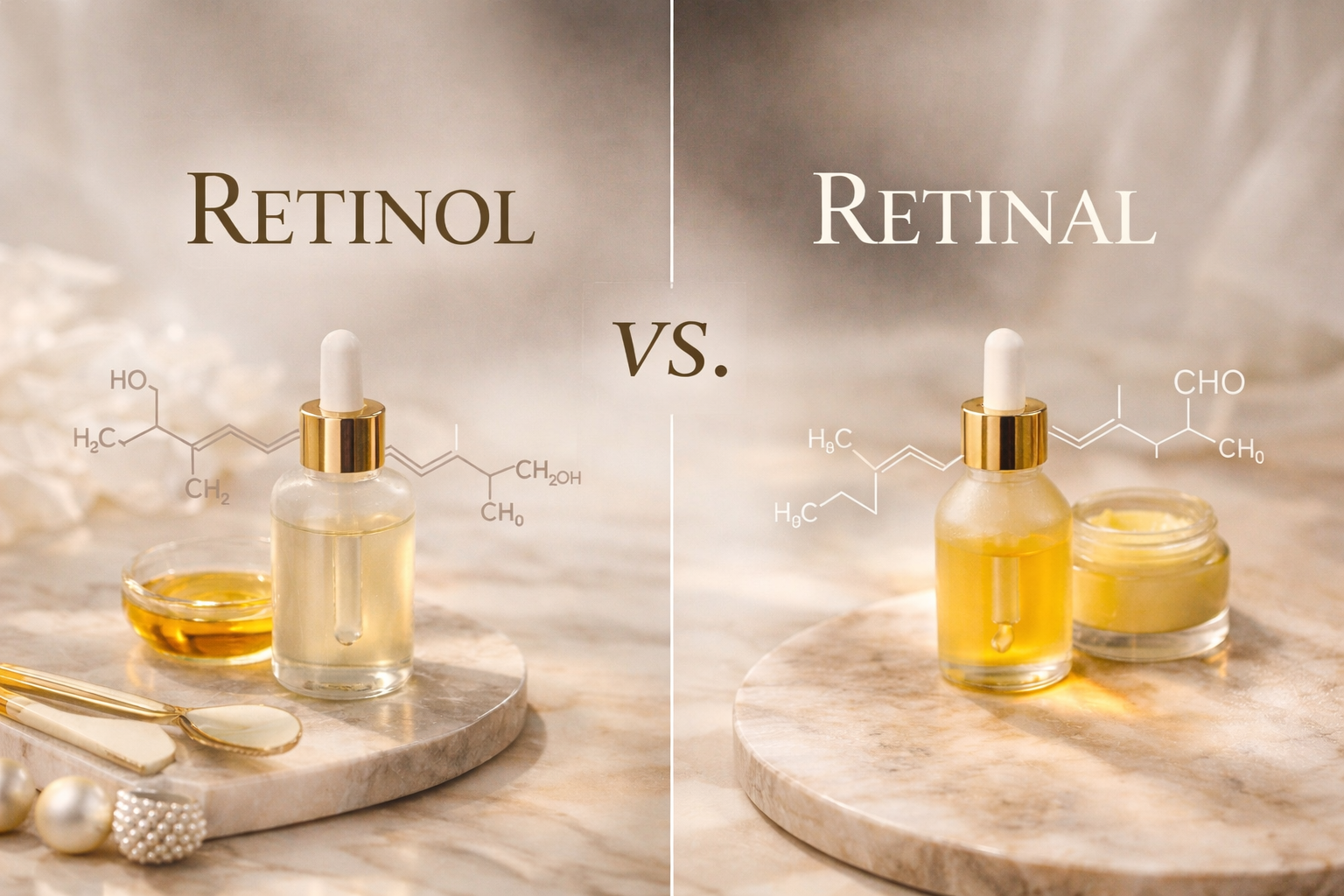
The Vitamin A Pathway, Simplified
Both retinol and retinal are precursors to retinoic acid. Once retinol or retinal is applied to the skin, they ultimately convert into retinoic acid. Retinoic acid is the active form your skin cells actually recognize and use to boost collagen, smooth texture, and fade pigmentation.
The difference lies in how many conversion steps they need to become retinoic acid:
Retinol → Retinal → Retinoic Acid (Tretinoin)
Retinal works one step closer to retinoic acid than retinol, meaning it’s faster-acting and typically more potent, but also a bit riskier for sensitive skin. Retinol, is a gentler introduction to Vitamin A that will still lead to impressive results, with both consistency and more time.
Potency, Irritation & Results
Retinal delivers results faster. Smoother texture, fewer fine lines, tighter pores, and often within weeks rather than months. But that potency can come with a side of dryness or irritation if you’re not already accustomed to retinoids or stronger acids.
This is why most over the counter anti-aging formulas use retinol, not retinal. It’s more stable, less reactive, and easier to formulate for universal use, especially when blended with barrier strengthening ingredients.
| Feature | Retinol | Retinal |
|---|---|---|
| Conversion Steps | 2 | 1 |
| Strength | Moderate | Stronger |
| Irritation Risk | Lower | Moderate |
| Results Timeline | Slower, steadier | Faster, more dramatic |
| Ideal For | Beginners, sensitive skin, daily use | Experienced users, resilient skin |
Why Korean Skincare Favors Retinol
K-beauty’s entire philosophy centers on skin barrier health, hydration, and gradual improvement over aggressive resurfacing. Retinol fits perfectly into that approach because it’s effective, but it allows for gentle, long-term results without compromising the barrier. Korean formulations often pair retinol with soothing ingredients like ceramides, centella asiatica, or panthenol to make it beginner friendly and safe for daily use. Retinal is starting to appear in select Korean lines, however, the majority of brands still prefer retinol or encapsulated retinol complexes for their balance of efficacy and comfort.
Why Most Dermatologists Prescribe Pure Retinoic Acid (Tretinoin)
Dermatologists love Tretinoin because it’s the most studied and clinically proven retinoid available. It delivers visible improvements in acne, fine lines, sun damage, and uneven texture faster than any over the counter option. But it’s also a prescription strength medication, meaning it’s potent enough to cause a ton of irritation, peeling, dryness, and sun sensitivity if used incorrectly.
The major red flag for prescription tretinoin (aside from irritation) is that while you will receive the gold standard for clinical results, a typical tube of this stuff can run you anywhere from $100 - $300 depending on strength, size, and pharmacy. These days most people want simple and convenient. Getting a prescription means scheduling an appointment, driving to the location, paying for the visit, then paying for the prescription. This has led to the rise in people using retinol or retinal formulas available over the counter instead. Although, beauty enthusiasts and die hard skin care buffs still go through the hassle because the tradeoff is worth it. (Raises hand, it’s me)
Retinal The Bridge Between Gentle Retinol And Prescription Strength Tretinoin
If retinol represents the gentle, patient side of skincare, and tretinoin embodies the fast, clinically proven end, then retinal is the perfect middle ground. For starters its scientifically closer to retinoic acid. Remember, it converts in just one step once applied to the skin, allowing it to deliver faster, more visible results than retinol. Yet it remains far less irritating than prescription tretinoin. Think of it as the modern upgrade to traditional retinol. Potent enough to target fine lines, texture, and tone, but still tolerable enough for daily use by most. It’s often favored by those who’ve outgrown beginner retinols but aren’t ready (or don’t yet need) to jump to prescription strength. Just a humble side note if I may* If you’re 30 and haven’t used one yet, your late. Get on it!! Think Alice in Wonderland white rabbit late! Although I am not the queen and I will not be shouting “Off with your head”!
Who Should Use What
Use Retinol if:
You’re new to retinoids,
You have sensitive skin
You have dry skin (maintain your barrier while building tolerance)
Use Retinal if:
Your skin can handle stronger actives (You use acids, have thick skin)
You’ve used retinol for at least 6–12 months and want to upgrade
You want faster visible results on fine lines, texture, and pigmentation
Pro tip: Retinoids (Retinol, Retinal, Tretinoin) always go on at night, after cleansing and before moisturizer. A thick nourishing moisturizer is recommended, and SPF every morning is non-negotiable.
Final Takeaway
Think of retinol as the “slow burn” and retinal as the “fast track.” Both work toward the same goal: smoother, brighter, firmer skin; but the best one for you depends on your skin’s tolerance, your patience, and your goals. How fast can your skin go vs how fast your skin should go. The answer will be different for everyone no matter age or skin care concern as no two people share the exact skin biology, tolerance, or healing rhythm. The right choice isn’t about which is stronger. It’s about which one your skin will love so that you can stay consistent and see those awaited results. And remember, whether your team Retinol, Retinal, or Tretinoin. Skin barrier safety is a must, so use that moisturizer and that SPF no matter what!
What I Look For In Brands
Clinical Credibility: I want to stick with brands that have dermatologist backed science. Meaning, those brands that have clinical studies and proven outcomes.
Ingredient Integrity: The formulation should be the latest in retinoid technologies, peptides, barrier support actives, without unnecessary fillers or hype. Transparency in ingredient lists matter.
Tolerance: Because we’re talking about potent actives like retinoids, I prioritize brands that minimize irritation. This can be done by encapsulation, molecule size, and buffer formulas.
Skin Type Inclusivity: A good brand gives options for various skin types; sensitive, normal, oily, thin, thick, younger, older as well as strengths; starter retinol, intermediate retinal, advanced retinal. This allows you to grow into a routine within a brand rather than feeling boxed out. And a brand that is aware of all Fitzpatrick skin tones is a winner! It is extremely important to remember that everyone can’t fit into the same “box”, I love a brand with a variety of formulations that cover everyone from the pastiest to the darkest princess or prince of the land!
| Stage | Product | Type / Strength | Why It’s Great | Price |
|---|---|---|---|---|
| Start | Some By Mi Retinol Intense Reactivating Serum | Retinol + Retinal + Bakuchiol | Gentle, K-beauty blend ideal for first-time users or sensitive skin | $30 – $32 |
| Start | COSRX The Retinol 0.1 Cream | 0.1 % Retinol | Lightweight starter cream for cautious beginners | $21 |
| Start | Anua Nano Retinol 0.3 % Niacin Renewing Serum | 0.3 % Retinol + Niacinamide | Budget-friendly formula with brightening and barrier support | $19 |
| Step Up | Innisfree Retinol Green Tea PDRN Firming Serum | Multi-retinol complex | Korean step-up option that firms and refines with antioxidants | $37 |
| Step Up | COSRX The Retinol 0.5 Oil | 0.5 % Retinol | Nourishing oil texture; stronger results with minimal dryness | $27 |
| Splurge | Obagi Retinol 1.0 | 1.0 % Encapsulated Retinol | Clinical-grade formula for seasoned users ready for visible renewal | $80 – $100 |
| Splurge | SkinCeuticals Retinol 1.0 | 1.0 % Stabilized Retinol | Dermatologist favorite for texture and collagen refinement | $102 |
| Splurge | K-Secret SEOUL 1988 Serum (Retinal + Black Ginseng) | 2 % Retinal Liposome | Luxurious Korean innovation; potent yet elegant finish | $15 – $20 |
| Splurge | Isntree Hyper Retinol EX 1.0 Serum | 1.0 % Retinol | High-strength K-beauty option for experienced retinoid users | $10 – $15 |
Disclaimer The information provided on this blog is for educational and informational purposes only and is not intended as medical advice. Individual results may vary. Always consult a qualified healthcare professional before starting any new skincare treatment or regimen.